This was my first real attempt at coming up with a narrative through storyboarding rather than scripting, and at first I found it pretty difficult to translate what was on my brain into a drawing that could depict the action and story I wanted to tell. I overcame this obstacle by redeveloping the process of what I considered to be storyboarding. After drawing some very rough outlines on a page, I then went out and did some basic test shots and weaved tracings of these into my storyboard which really helped me to get going with the task.
Usually the stories and scenes I develop are very character-focused, and therefore dialogue has always been crucial to my approach of constructing a scene. This task helped me to take a totally different approach and in the end, I developed a scene that had virtually no dialogue in it at all and yet still managed to be somewhat character-focused. Through this storyboard I wanted to try and convey the tone of the scene clearly along with a strong idea of the pacing of it. The scene that I came up with is quite achievable in the confines of lockdown and so I might use part of it for my final submission of this module.
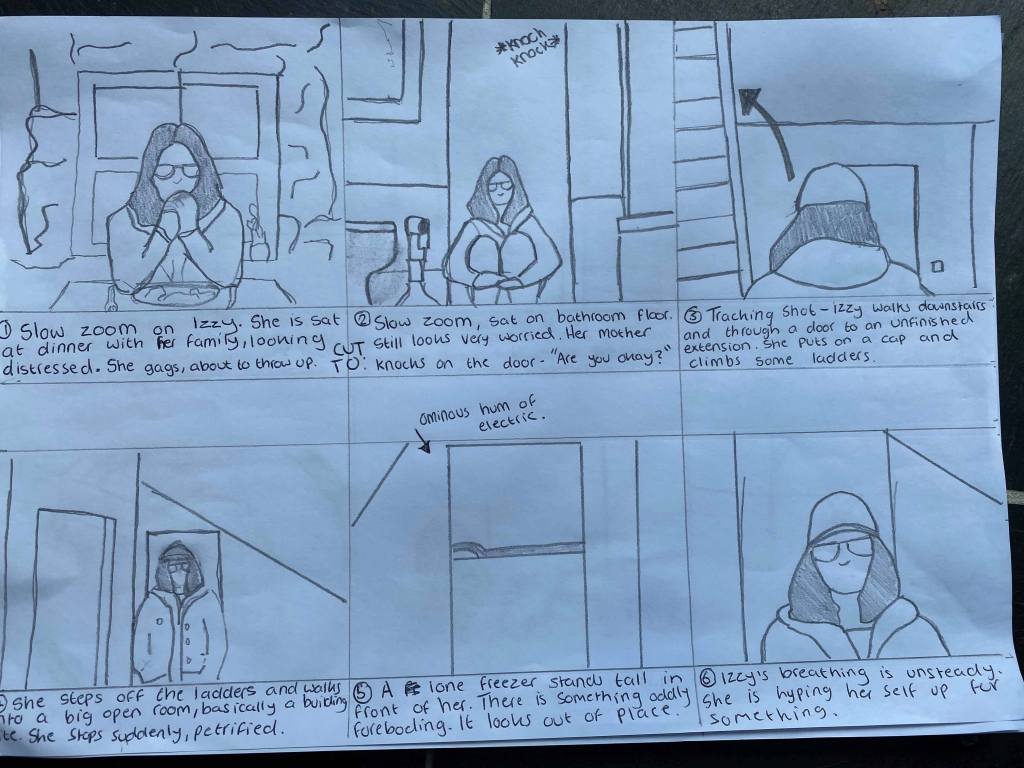
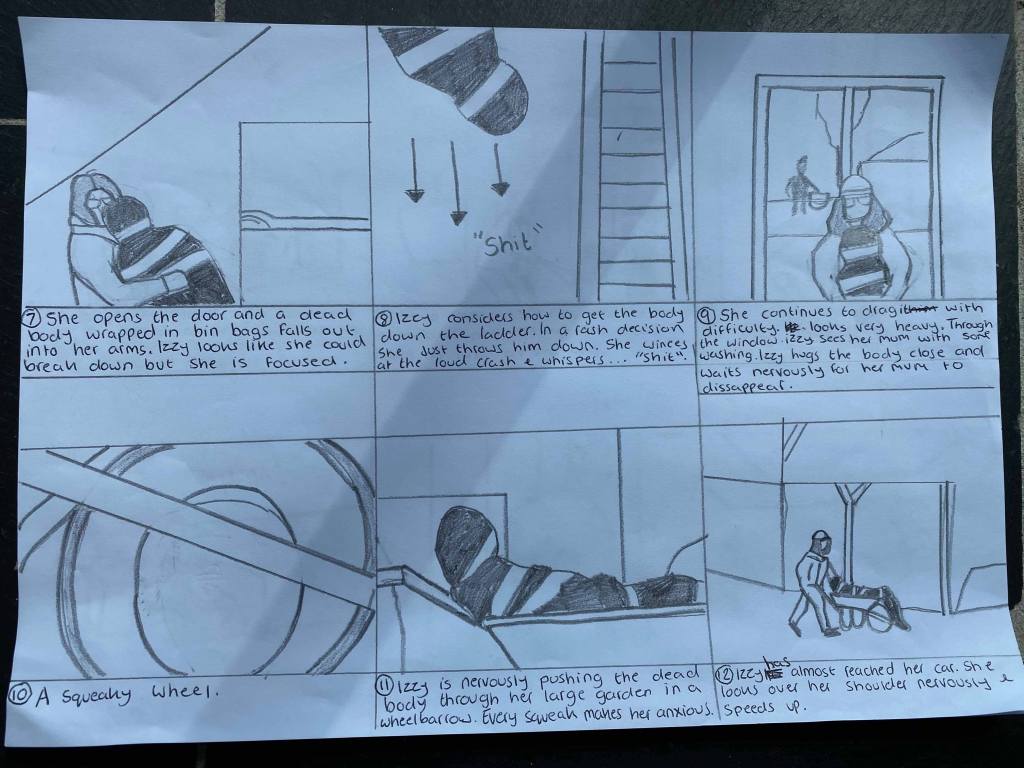
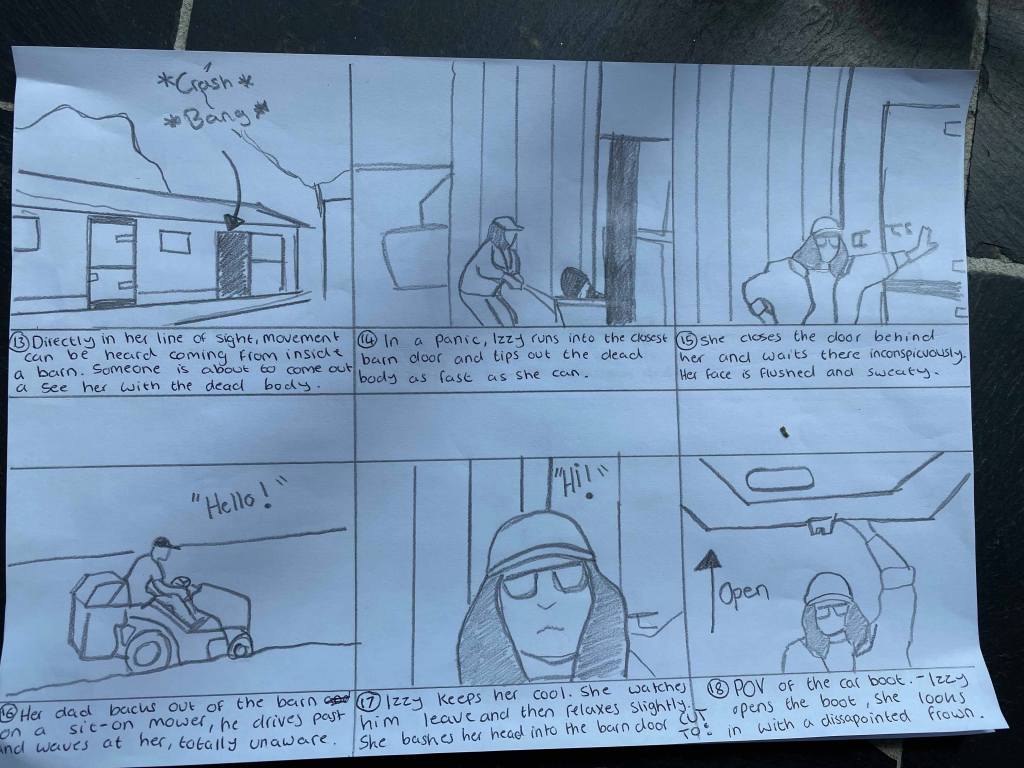
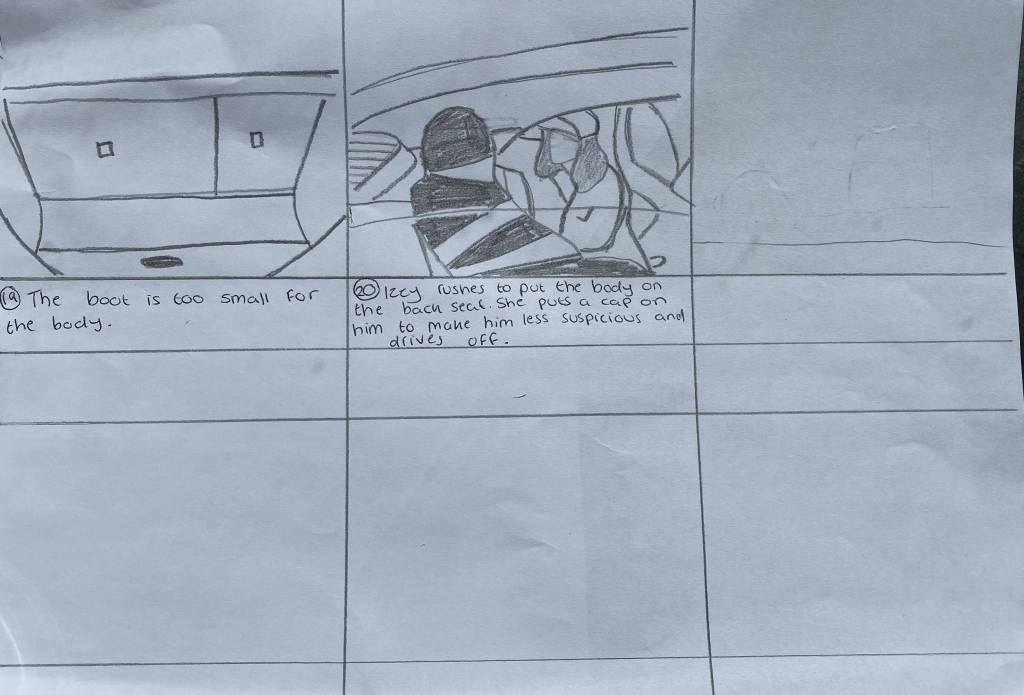
My storyboarded scene is set at my house on a farm, and is focused on a young woman like myself. I do have experience in acting and so if/when I shoot this, I think I would definitely take advantage of this and act myself, helping to eliminate the limitation of not being able to work closely with actors face to face during lockdown. The scene follows a young woman trying to get a dead body out of her house without anybody seeing her, the girl is totally panicked and heavily distressed throughout and has to clumsily get herself out of some tight situations in her attempt to cover it all up. It’s the beginning of a stylised dark comedy that requires very little dialogue. I thought through combining drawings from scratch and traced drawings of my own test shots, or similar shots from other films, was very effective and allowed me to portray the story similar to how I pictured it in my head. I think especially for films that are very action-heavy, a storyboard is much more valuable to a production team than a script. Storyboarding encouraged me to think more visually and as a result I think I found more opportunity for visual comedy and tension than I would have otherwise.
In the future, I might storyboard a scene first and then write the script after, a process that I think would help me be able to approach the construction of a scene in a clear and precise way, especially if the action of the scene is complicated and/or important.
Here is the storyboard I came up with (the writing is a little cut off in places):
 PCA Isobel Wilkinson - BA Film