I would say that today’s topic was the broadest one covered this term, and at first the vagueness of it seemed pretty daunting. Three words that describe principles that everyone experiences in a different way, a seemingly difficult group to cover and find connections in one session. We started with time and specifically looked at Christian Marclay’s continuous screening of ‘Time’, a 24hr montage of film clips where the time on screen corresponds with the real time on your clock when you are watching. I found this video very interesting, not only because it must have taken an enormous amount of time and effort to pull it off but also because it made me question and reflect upon the use of time in film. Most films don’t really explore time in unique ways as they generally follow a classical narrative and don’t really play with the concepts, with the exception of films like ‘Inception’ and ‘Interstellar’ where the slowing of time as we know it is a vital part to the development of characters and story. The most popular use of time in films is focused around the lack of it, giving the characters and story a deadline to complete a task by.
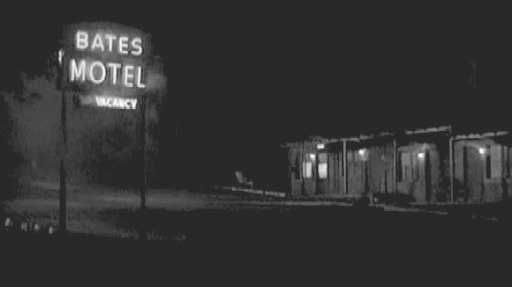
The next topic we looked at was space. I really like the idea that space is ‘practiced space’, meaning it is what someone does in the space that defines the meaning of it. This links to the concept of non-places, i.e ones that have a transient meaning because it is a conduit to other places or not somewhere where enough meaningful interactions happen to give it an identity. The first maker I researched was linked to this idea of non-places, Alfred Hitchcock’s films that are set in non-places. For example, ‘Lifeboat’ and the motel in ‘Psycho’. Here he takes 2 non-places and sets high tension narratives in them and I think using space in this way draws more attention to the ‘nitty gritty’ of the story and characters. I’m particularly interested in ‘Psycho’, originally written by Robert Bloach and brought to life by Hitchcock. With ‘Psycho’, the use of a non-place like the motel adds to the suspense and horror of the story as it’s an unexpected and therefore harrowing location for Norman Bates to hunt in. It’s a space that many people would have experienced before but never stopped to think about what is the history of the space is and considered what has occurred there other than a person’s individual and relatively meaningless encounter at a motel. I think a space like a motel is a great narrative tool for dark things to happen because of its universal ambiguity and how its lack of identity takes the warmth out of the place.
The final part of the session looked at the everyday and we looked briefly at the hierarchy of needs and Grayson Perry’s “All in the Best Possible Taste” tapestries that reflected on a large unspoken part of everyday life; class. The filmmakers that I looked at regarding this topic were director Ken Loach and writer Paul Laverty and their film; “I, Daniel Blake”. A powerful piece of working-class storytelling, it’s a film that specifically focuses on the struggle of the everyday life. No dragons or earthquakes or ghosts, just the sinister hardship of being subjected to uncaring bureaucratic systems and yet it is equally, if not more, engaging than its counterpart stories that explore arguably more ‘exciting’ ideas. Using the concept of everyday in a film brought a sense of realism to the viewer that is heart-breaking and alarming at the same time. Using the everyday experience in storylines are arguably the best way to convey a message to the audience as the realism of it is so digestible for viewers.

 PCA Isobel Wilkinson - BA Film