Before we explored any more unique editing styles it was important that we revised what it is that we are comparing them with, the classical Hollywood narrative style. Much similar to what we see today on our screen, classical Hollywood narrative was a universal base line for almost all editing styles used today.
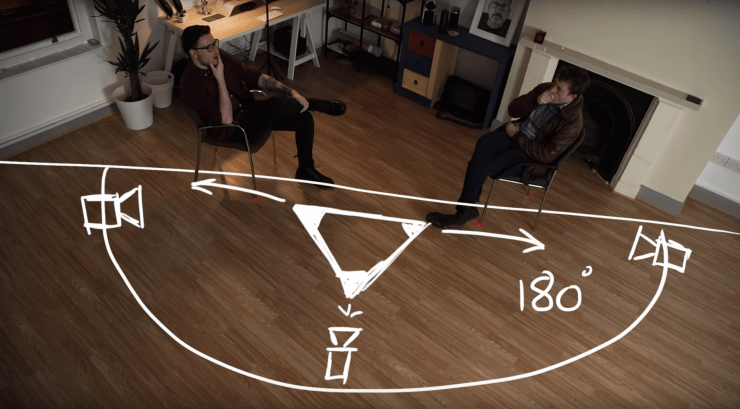
One key feature of this is the 180-degree rule. When the camera is first set up, it is put on one side of the line of action happening between actors and it must remain on that side for the mid shots and close ups following or else the spatial relationship in the scene will appear to change between shots and will confuse the viewers. This is a rule that is so commonly used in film today. However, this rule can and is of course broken in some films but this is usually done on purpose to achieve a certain effect, for example, if they actually wanted to confuse and disorientate viewers in a narrative.
I found this image a clear and easy to understand the concept:
Another feature we looked at was cutting on action and classical Hollywood’s attention to detail when it came to continuity. Both of these features help the narrative flow and avoid any jarring cuts in the films, when the camera is moved it is also only moved around 30 degrees in another direction to avoid any noticeably big jumps in perspective. I think it is also linked the Hollywood’s increasing desire to be hyper realistic in their movies as time went on, people are more likely to connect with a character and narrative if they are never reminded that they are in fact watching a film and are allowed to immerse themselves in the story and I think these features contribute to the suspension of disbelief.
 PCA Isobel Wilkinson - BA Film